
stiltsrrhe
ผู้เยี่ยมชม
stiltsstilts@outlook.com
jumping stilts (5 อ่าน)
28 ต.ค. 2569 17:49
The Ultimate Guide to jumping stilts: Benefits, Safety, and How to Get Started
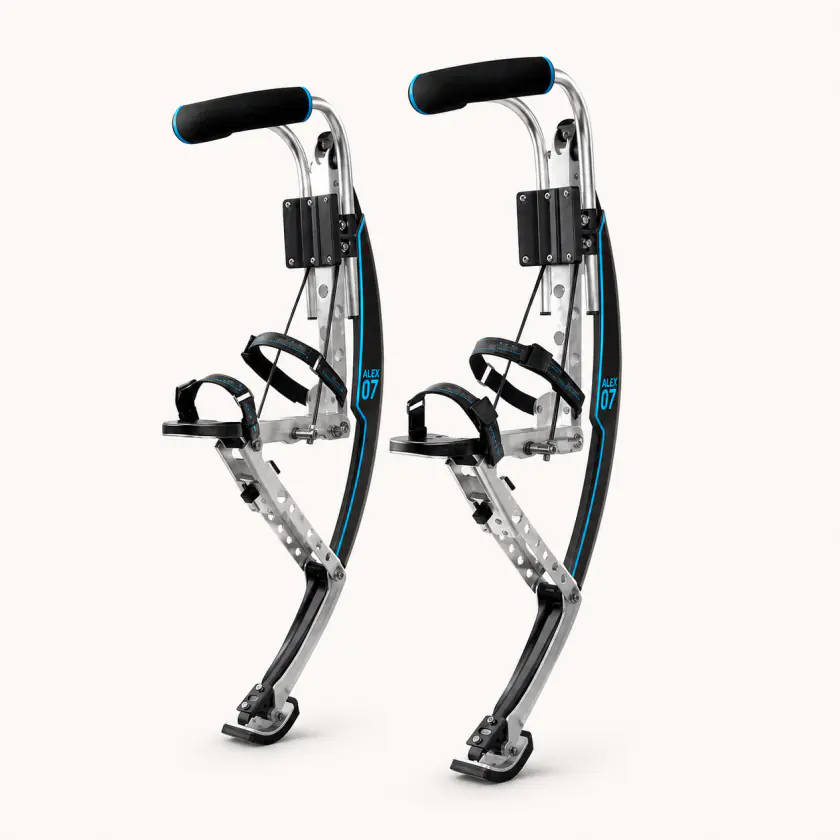
Jumping stilts are one of the most exciting ways to combine fitness, fun, and extreme sports. Also known as powerbocks, spring stilts, or bouncy stilts, they use powerful springs to let you run faster, jump higher, and perform gravity-defying tricks. This guide covers everything you need to know: how they work, how to choose a pair, safety tips, training advice, and more.
---
## What Are Jumping Stilts?
Jumping stilts are special spring-loaded stilts that strap onto your legs. They typically feature:
- A curved fiberglass or carbon fiber spring
- A footplate with bindings or straps
- A calf cuff for upper-leg support
- Non-slip rubber feet for traction
When you walk or run, the spring compresses and releases energy, letting you bounce and jump far higher than you could unassisted.
---
## How Do Skyrunner Jumping Stilts DE Work?
The key component is the leaf spring. As you land on each step:
1. Your weight compresses the spring.
2. The spring stores elastic energy.
3. As you push off, that energy is released, boosting your stride or jump.
Depending on the model and your weight:
- Vertical jumps of 1.5–2 meters (5–7 feet) are possible with advanced skill.
- Running speeds of 20–30 km/h (12–19 mph) can be achieved by experienced users.
---
## Benefits of Using Jumping Stilts
### 1. Full-Body Workout
Jumping stilts provide intense exercise that engages:
- Legs (quads, hamstrings, calves, glutes)
- Core muscles for balance and stability
- Upper body and arms for coordination and momentum
You can burn a high number of calories in a relatively short training session.
### 2. Improved Balance and Coordination
Balancing on stilts trains:
- Proprioception (your sense of body position)
- Reaction time
- Joint stability in ankles, knees, and hips
Over time, this can improve your overall athleticism and movement control.
### 3. Cardiovascular Fitness
Continuous jumping, running, or bounding elevates your heart rate, making jumping stilts a fun alternative to running or cycling. Many people use them for:
- High-intensity interval training (HIIT)
- Cardio sessions
- Weight-loss workouts
### 4. Fun and Motivation
Because jumping stilts feel like a mix of parkour, trampolining, and running, many users find them:
- More enjoyable than traditional gym workouts
- Highly social, especially in group sessions or meetups
- A great way to stay motivated and active
---
## Who Are Jumping Stilts For?
Jumping stilts can be suitable for:
- Teenagers and adults in good general health
- Fitness enthusiasts looking for new challenges
- Dancers, traceurs, and performers
- Extreme sports and cosplay communities
They are generally **not** recommended for:
- Young children
- People with serious knee, ankle, hip, or back problems
- Anyone recovering from recent leg or spinal injuries
Always consult a medical professional if you’re unsure.
---
## Types of Jumping Stilts
Modern jumping stilts vary in:
- **Weight range**: Models are tuned to specific user weight spans (e.g., 50–70 kg, 70–90 kg).
- **Spring stiffness**: Heavier and more advanced users often prefer stiffer springs.
- **Build quality**: Entry-level models vs. professional-grade stilts.
Common style categories:
1. **Recreational Stilts**
- Designed for beginners and casual users
- Emphasize comfort, safety, and stability
2. **Freestyle / Trick Stilts**
- Optimized for stunts, flips, and parkour-style moves
- Typically lighter and more responsive
3. **Performance Stilts**
- Used by entertainers, stage performers, and event professionals
- Focus on durability and visual design
---
## How to Choose the Right Jumping Stilts
### 1. Match Your Weight
Always choose stilts rated for your body weight. Using stilts outside their weight range can:
- Reduce performance
- Increase the risk of spring damage or failure
- Affect your balance and control
Most manufacturers provide detailed weight charts—follow them carefully.
### 2. Consider Your Skill Level
- **Beginners**: Opt for stable, beginner-friendly models with good padding and secure straps.
- **Intermediate/Advanced**: Look for lighter frames, adjustable calf cuffs, and higher-performance springs.
### 3. Check Build Quality and Safety Features
Examine:
- Frame material (aluminum or high-grade alloys preferred)
- Quality of bolts, screws, and welds
- Strap durability and comfort
- Non-slip rubber feet and grip pattern
Reading user reviews and expert recommendations helps identify reliable brands.
### 4. Budget and Value
Prices range from budget-friendly entry models to premium professional setups. Consider:
- Cost vs. durability
- Availability of replacement parts (springs, straps, rubber feet)
- Warranty and customer support
---
## Safety Tips for Using Jumping Stilts
Jumping stilts are high-impact and can be dangerous if used carelessly. Follow these key safety guidelines.
### Essential Protective Gear
Always wear:
- **Helmet** (skate or bike style)
- **Wrist guards**
- **Knee pads**
- **Elbow pads**
- **Gloves** (optional but recommended)
For beginners, consider additional:
- Padded shorts or hip protectors
- Shin guards if you’re prone to knocks
### Practice Environment
Start in a:
- Flat, even, and obstacle-free area
- Non-slippery surface such as smooth asphalt, sports courts, or packed ground
- Space away from traffic, crowds, and glass
Avoid:
- Wet or icy surfaces
- Loose gravel or deep grass
- Steep slopes until you’re very experienced
### Learn the Basics First
Before you try running or jumping, master:
1. **Standing and balancing**
2. **Small steps and weight transfer**
3. **Controlled turns**
4. **Safe falling techniques** (tuck and roll, avoid stiff arms)
Progress slowly. Overconfidence leads to many early injuries.
---
## How to Get Started: Step-by-Step
### 1. Adjust and Fit Your Stilts
- Set the correct height if the model allows adjustment.
- Tighten all bolts and check the springs.
- Fit the foot straps snugly but comfortably.
- Ensure the calf cuffs are secure and don’t rub excessively.
### 2. Use a Support at First
Hold onto:
- A stable wall or rail
- A sturdy chair or training partner
Practice:
- Standing up straight
- Shifting weight between legs
- Lifting one foot slightly off the ground
### 3. Start Walking
- Take tiny steps, keeping your center of gravity over your feet.
- Bend your knees slightly at all times for shock absorption.
- Gradually lengthen your stride as you gain confidence.
### 4. Progress to Light Bouncing
Once you can walk comfortably:
- Begin gentle bounces in place.
- Focus on smooth, controlled landings.
- Don’t rush to jump high; stay within a comfortable range.
### 5. Running and Jumping
When you’re stable:
- Increase your pace to a light jog, then a run.
- Practice low jumps, focusing on form and safe landings.
- Over time, work on higher jumps and more advanced movements.
---
## Common Mistakes to Avoid
- **Skipping protective gear**: This is one of the biggest risk factors for injury.
- **Starting with advanced tricks**: Learn the basics thoroughly first.
- **Over-tightening or under-tightening straps**: Both can cause discomfort and instability.
- **Ignoring fatigue**: Tired legs and lapses in focus greatly increase the likelihood of falls.
---
## Maintenance and Care
Proper maintenance extends the life of your jumping stilts and keeps them safe.
- **Inspect before each use**: Look for cracks, loose screws, and worn rubber feet.
- **Tighten hardware** regularly with the correct tools.
- **Clean after dirty sessions**: Wipe mud and debris from springs, joints, and straps.
- **Store indoors**: Keep stilts dry, away from direct sunlight and extreme heat.
- **Replace worn parts**: Springs, rubber feet, straps, and pads should be swapped when visibly damaged or degraded.
---
## Training Ideas and Workouts with Jumping Stilts
Once you’re comfortable on your stilts, you can structure your sessions like workouts.
### Beginner Session (20–30 Minutes)
- 5–10 minutes: Warm-up without stilts (light jog, dynamic stretching)
- 10–15 minutes: Walking drills, balance practice, gentle bounces
- 5–10 minutes: Cool-down and stretching
### Intermediate Session (30–45 Minutes)
- Running intervals using a set distance or time
- Short jump combinations (two or three hops in a row)
- Balance challenges such as slow-motion walking or tight turning
### Advanced Session
- Sprint intervals and direction changes
- Small obstacle jumps and parkour-style movements
- Trick practice in a controlled environment (only with proper experience and safety planning)
---
## Frequently Asked Questions About Jumping Stilts
### Are jumping stilts safe?
They can be used safely when:
- You wear appropriate protective gear
- You practice in a safe area
- You progress gradually and respect your limits
As with skateboarding, BMX, or parkour, there is always some risk.
### How long does it take to learn?
Most people:
- Stand and walk within a few short practice sessions
- Run and make basic jumps after several hours of total practice
- Need weeks or months to master advanced tricks
### Can jumping stilts help with weight loss?
Yes. Because they provide intense cardio and strength training, they can burn many calories and support fat loss when combined with a sensible diet.
### What age is appropriate?
Many manufacturers recommend use for ages 12 and up, depending on size, strength, and coordination. Check the specific model’s guidelines and consider supervision for teens.
---
## Conclusion
Jumping stilts offer a unique mix of fitness, adrenaline, and fun. With the right equipment, a focus on safety, and consistent practice, you can enjoy:
- Higher jumps
- Faster running
- A demanding full-body workout
https://www.bangyaimaterial.com/forum/topic/246301/jumping-stilts
Whether you’re looking to spice up your exercise routine, join an extreme sport, or create impressive performances, jumping stilts are a powerful and exciting option.
If you’d like, I can also help you outline a training plan or compare popular jumping stilt brands and models.
61.221.116.28
stiltsrrhe
ผู้เยี่ยมชม
stiltsstilts@outlook.com